In Our Classroom
Tools We Love
Not a sponsored roundup, not an affiliate list masquerading as advice. Just the books, systems, and slightly unhinged organizing projects that actually earn their spot in our homeschool. If it's here, it's because we use it constantly — not because it looked good on a shelf.
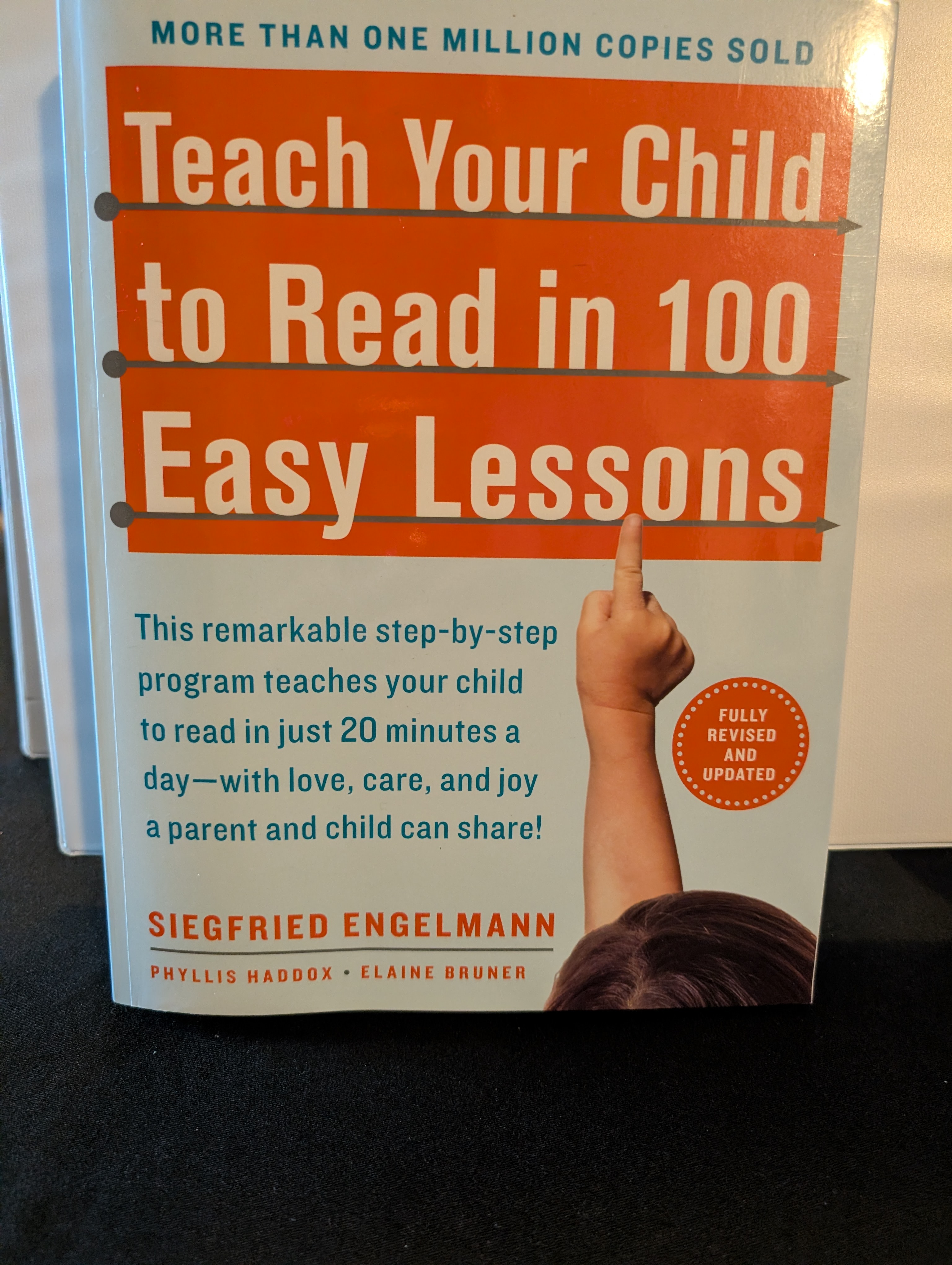
Teach Your Child to Read in 100 Easy Lessons
This book is not cute. It is not colorful. There are no adorable woodland creatures holding alphabet cards. It has the clearest explanations on how to teach reading. Teach Your Child to Read in 100 Easy Lessons is a structured, scripted reading program that builds skills gradually through sounds, blending, decoding, and eventually reading actual stories. Each lesson is short, predictable, and designed to build directly on what was learned before.
What I especially love is that I don't have to reinvent the wheel. The book tells me exactly what to say and do, while still giving us the freedom to stop, repeat something, shorten a lesson, or come back to it another day. We don't race toward Lesson 100 just so we can say we finished it. The goal is reading and not checking boxes.
For a kid who needs consistency without sitting through an hour-long language arts lesson, this has been a fantastic fit. We can work for a little while, celebrate the win, and move on with our lives. No elaborate prep. No worksheets for the sake of worksheets. No busywork. Just learning to read. Sometimes the boring-looking little book is the one that gets stuff done.
Our Library System
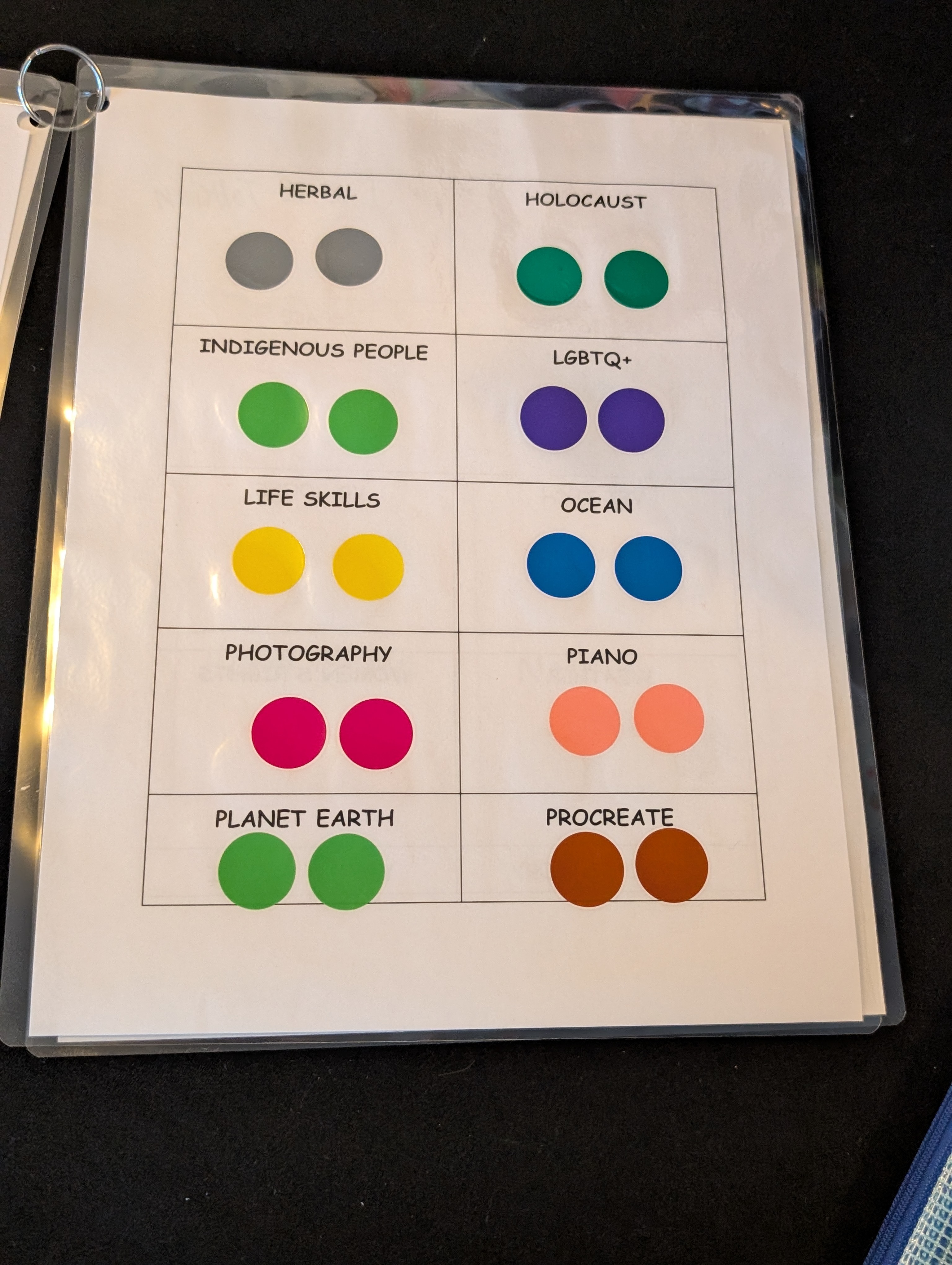
Our home library is big enough that "just put the books on a shelf" stopped being a realistic strategy a long time ago. So I created our own color-coded library system because I am...well very anal. Every subject and topic in our library is assigned a specific colored dot. Those categories go far beyond the traditional "science, history, and reading." We have categories for everything from oceans and Indigenous peoples to photography, life skills, LGBTQ+ topics, the Holocaust, art, music, individual interests, and whatever other rabbit hole we've wandered into. Each book gets its corresponding colored sticker, and I keep a laminated master key so we always know what each color means.
The important part, though, isn't that it makes the shelves look organized. It makes our library usable. If we're suddenly learning about sharks, we can find the ocean books. If a conversation turns into a question about Indigenous history, we know where to look. If somebody becomes fascinated with photography on a random Tuesday afternoon, there is a category for that too. That's a huge part of how learning works in our house. Questions don't have to wait until I create a lesson plan. The kids can follow their curiosity while it's happening.
Our books aren't decorations, and they aren't saved for "school time." They're tools. They're constantly pulled off the shelves, carried around the house, stacked beside beds, dragged into projects, and used to answer the approximately 47 billion questions children manage to ask in a day.
Is creating a color-coded cataloging system for a home library slightly unhinged? Yes. Would I absolutely do it again? Also yes. Zero regrets.
The Board Game Rule Masterbook
We play a lot of board games around here. Games are one of my favorite ways to teach because kids can practice math, reading, strategy, logic, geography, history, problem-solving, cooperation, and occasionally the important life skill of losing without flipping the damn table. But there was one problem: the rulebooks. They're tiny. They get folded. They disappear into boxes. Someone inevitably puts them underneath the game insert. And when you own a ridiculous number of games, remembering exactly how every single one works is not happening.
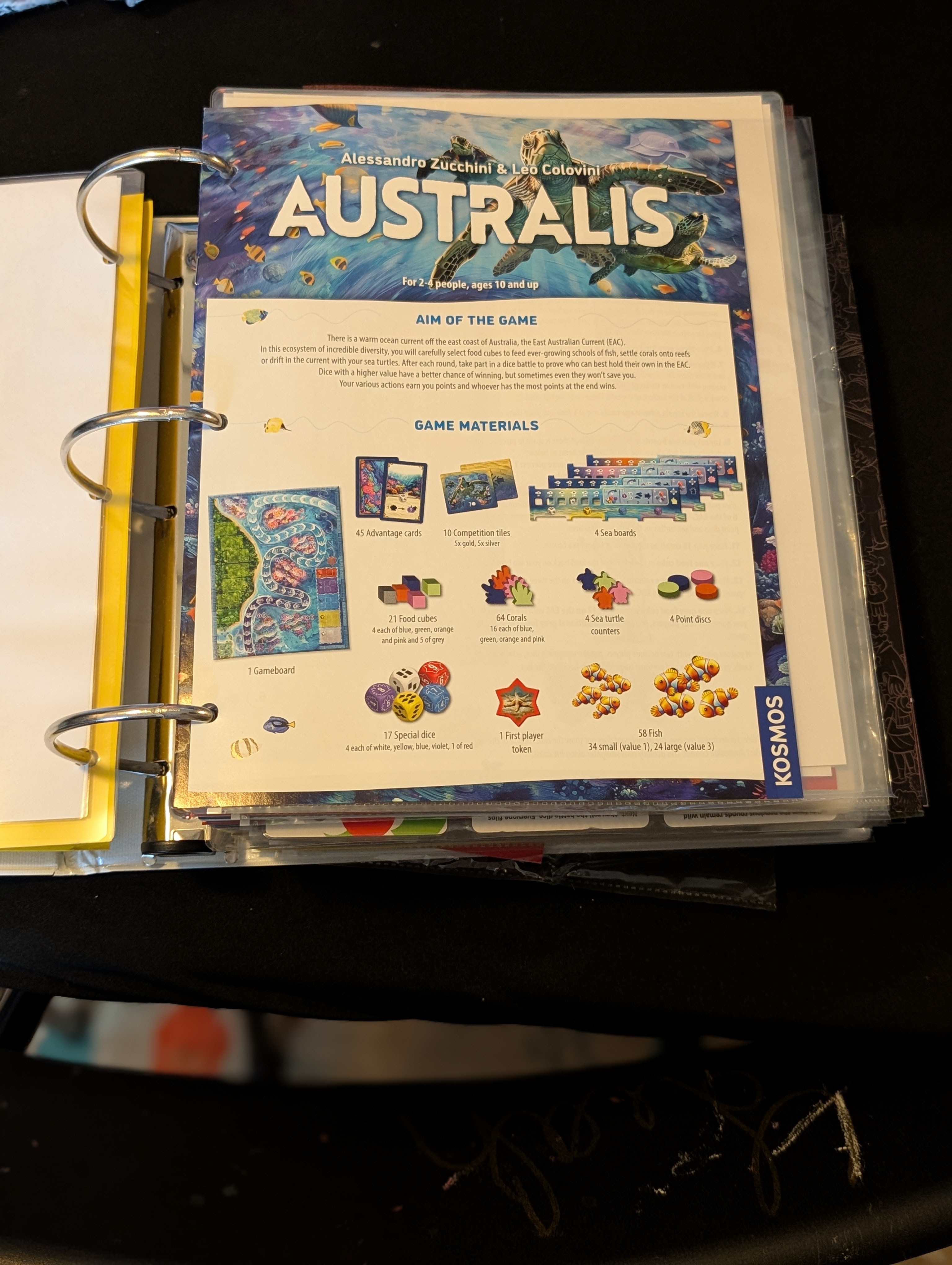
So I made a Board Game Rule Masterbook. I took the instructions for our games, put them into page protectors, organized them in one giant binder, and now we have one place to look whenever someone inevitably asks, "Wait...are you allowed to do that?" It sounds like a small thing, but it makes our games much more accessible. Instead of digging through boxes or abandoning a game because nobody remembers the rules, we grab the binder, find the game, and we're playing.
And because board games are genuinely part of our homeschool, not something we do only after the "real learning" is finished, this binder is basically one of our textbooks. Except this textbook contains significantly more dice. And considerably more accusations of cheating.
The Story Orchestra
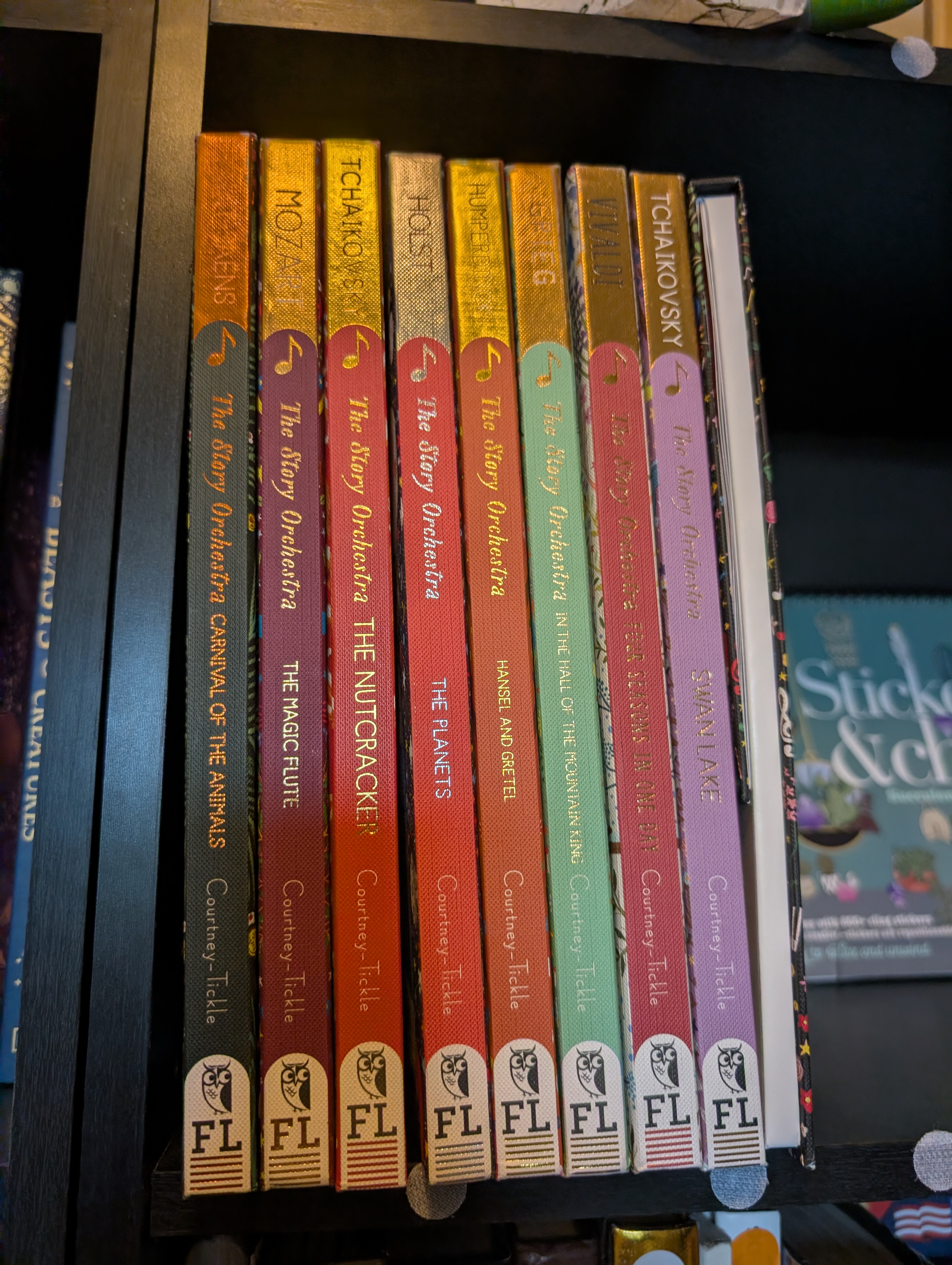
Classical music can be incredibly beautiful. It can also be a very hard sell when your audience would rather be playing Minecraft. Enter The Story Orchestra books. These books combine beautifully illustrated stories with actual excerpts from famous pieces of classical music. As we read, the kids can press the buttons and hear the music that belongs to that part of the story. We have books featuring composers like Mozart and Tchaikovsky, along with ballets and musical stories including The Nutcracker, Swan Lake, The Sleeping Beauty, and The Carnival of the Animals.
I love these because classical music isn't presented as something children need to study, memorize, or sit quietly through for an hour. They get a story first. Then the music becomes part of that story. Suddenly Tchaikovsky isn't just the name of some dead composer they're supposed to remember. His music is attached to characters, movement, emotion, and something they've experienced.
That's really my goal with classical music in our homeschool. I don't need my kids to identify every composer by ear or explain the structure of a concerto. I want them to recognize it. Experience it. Appreciate it. And know that this kind of art belongs to them, too. Sometimes that starts with sitting through an orchestra performance. And sometimes it starts with a kid repeatedly smashing the same little sound button in a book until you've heard The Nutcracker excerpt 37 times. Both count.
The DK Anthologies
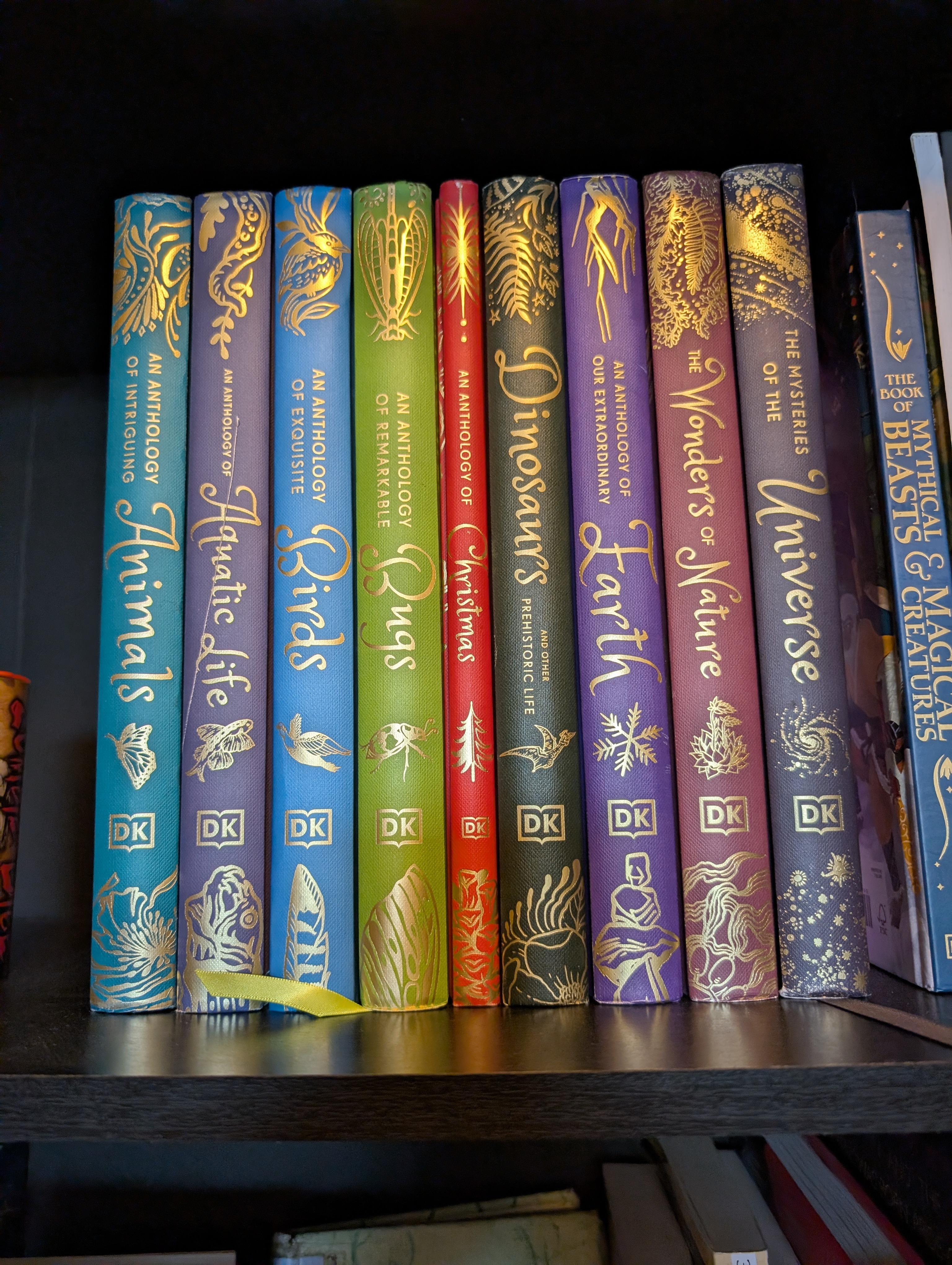
These are some of my favorite books in our entire library. We have anthologies covering animals, aquatic life, birds, bugs, dinosaurs, nature, the universe, Christmas traditions, and all sorts of wonderfully weird things on Earth. They're gorgeous, beautiful illustrations, photographs, interesting little facts, and short sections that make them incredibly easy to browse.
And browsing matters in our homeschool. I don't always need a child to sit down and read a nonfiction book from beginning to end. Sometimes learning starts because someone pulls one of these off the shelf, flips through it, sees a bizarre-looking bird and says: "What the hell is THAT?" Excellent question. Class is apparently in session.
These are especially useful for interest-led learning because there is no required starting point. Open to any page. Read one paragraph. Study an illustration. Find something fascinating. Look it up. Grab another book. Watch a documentary. Suddenly we're three hours deep into prehistoric ocean creatures when we originally came upstairs looking for scissors. That counts.
I want our library filled with books that invite curiosity rather than demand attention. These do exactly that. Also, they're absolutely beautiful lined up on the shelf, and I refuse to pretend that doesn't bring me an unreasonable amount of joy.
Our Interactive Board
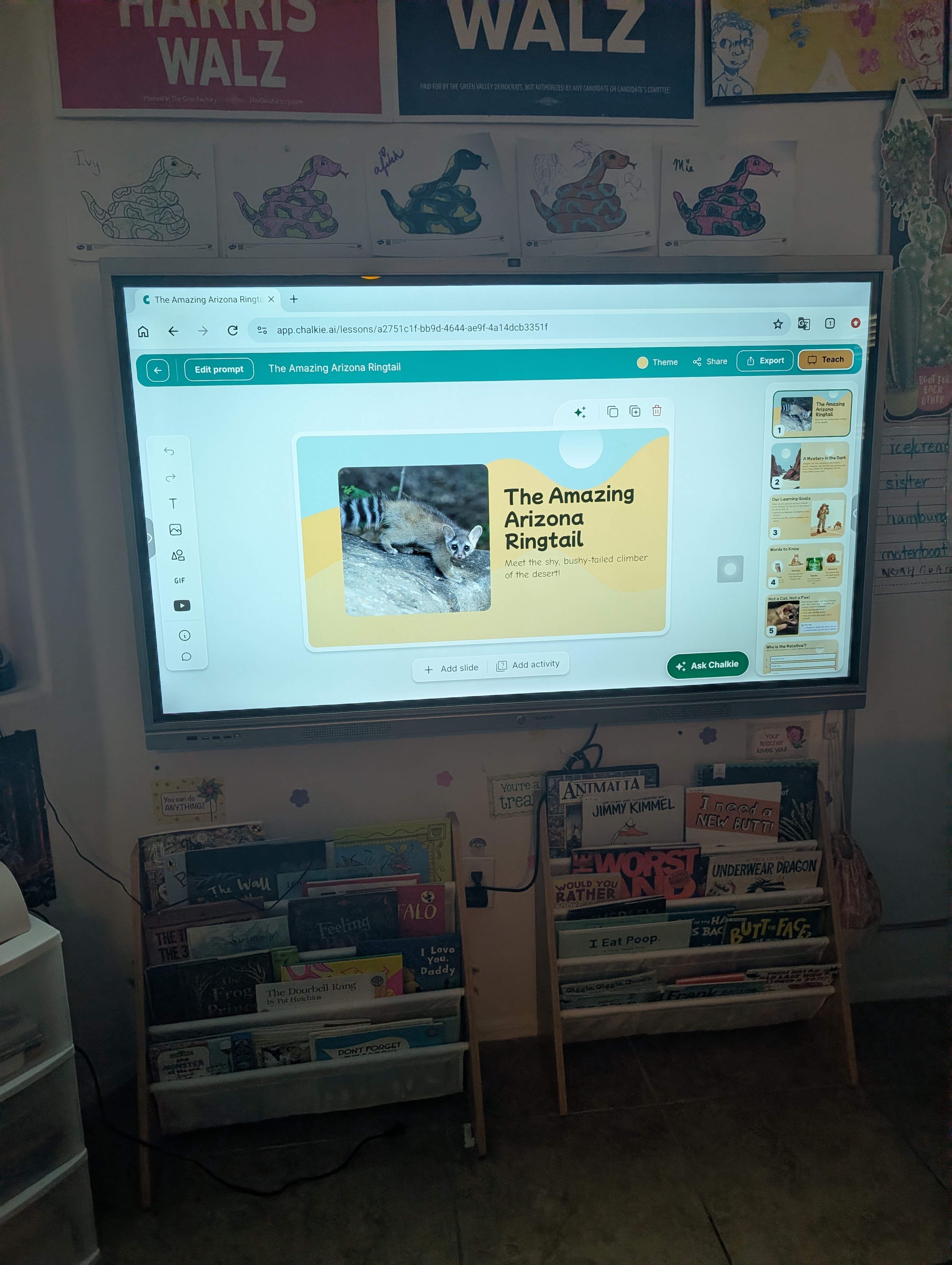
This might be one of my favorite things in our classroom. Our 65-inch interactive board lets me take something that could have been a worksheet, textbook page, video, presentation, map, photograph, or random question and turn it into something the kids can actually touch and interact with. We use it for lessons, videos, research, games, maps, demonstrations, and presentations. I can build a lesson around whatever we're currently interested in, put it on the board, and suddenly we're learning together instead of everyone staring down at separate pieces of paper.
And yes, sometimes our lesson is about an Arizona ringtail because someone wanted to know about an Arizona ringtail. That's the point. Technology gives me the ability to follow those interests quickly. A question doesn't have to become something I'll "make a lesson about later." We can pull up pictures, maps, videos, books, and interactive material right now, while the curiosity is still there.
I also love that the board gets bodies involved. Kids can come up, touch the screen, move things around, answer questions, draw, point, write, and participate instead of being expected to sit perfectly still while I talk at them. We absolutely use books. We use pencils. We build things, dissect things, grow things, play games, make art, and occasionally create science experiments that make me question my own judgment. And we use technology. I don't think those things compete with each other. The magic happens when we use whatever tool makes learning accessible, interesting, and meaningful in that particular moment.
Also, I get an unreasonable amount of joy from touching a 65-inch screen to change the slide. The children are not the only ones who require enrichment.
Our Class Pets: Convict Cichlids
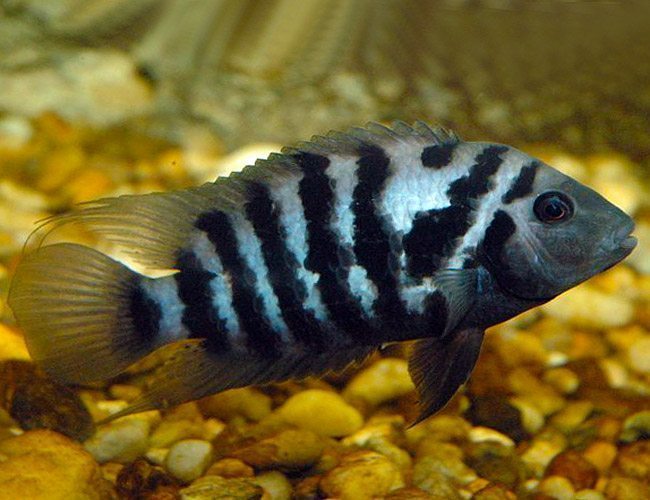
Every classroom needs a class pet, and ours happen to be a school of convict cichlids. They're part of the everyday scenery here, feeding time, water changes, and the occasional biology lesson on fish behavior and aquatic ecosystems, all built right into daily life.